



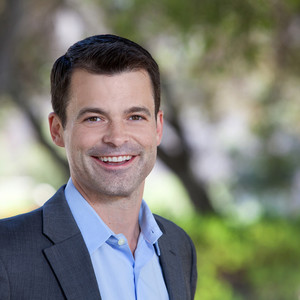

Robb Willer
- Media Contact
Robb Willer is a Professor in the Departments of Sociology, Psychology (by courtesy), and the Graduate School of Business (by courtesy) at Stanford University. He is the Director of the Politics and Social Change Lab and the Co-Director of the Center on Philanthropy and Civil Society.
Professor Willer’s teaching and research focus on social forces that bring people together (e.g., morality, altruism), forces that divide them (e.g., fear, prejudice), and domains of social life that feature the complex interplay of the two (e.g., hierarchies, politics).
The primary area of his research looks at the social and psychological forces shaping Americans’ political attitudes. He has a particular interest in techniques for overcoming polarization to build political consensus. He studies how political psychology findings can be applied to construct persuasive political messages.
Much of his political research suggests that attitudes and ideology are, in part, products of individuals' efforts to manage the threats they face in everyday life. For example, he has found that masculinity threats can influence men's attitudes towards war and gay rights. In other research, he finds a link between white Americans' views of welfare programs and the Tea Party and their perception that white advantage in the U.S. is declining.
The other main area of his research looks at how altruism, morality, and reputation systems promote cooperation and generosity. In this research he finds that many aspects of social life that are often seen as antisocial or malicious - such as gossip, moral judgments, and status hierarchies - are fundamental to social order. He also studies the dynamics of status and prestige, with a focus on the social psychological forces that stabilize hierarchies of rank. Recently, he has studied the role that emotions play in the moral judgments people form about one another, and how those judgments in turn can promote cooperation and solidarity in groups.
In his work he employs whatever research method offers the most leverage on a given research question. As a result, he has used a variety of methods, including laboratory and field experiments, surveys, archival research, social network analysis, physiological measurement, agent-based modeling, and direct observation of behavior.
His research has appeared in sociology, social psychology, organizations, political science, and general science journals, including Science, Nature, Proceedings of the National Academy of Sciences, Nature Human Behaviour, American Sociological Review, American Journal of Sociology, Annual Review of Sociology, Journal of Personality and Social Psychology, Psychological Science, Administrative Science Quarterly, Organization Science, and elsewhere.
Primary Interests:
- Ethics and Morality
- Evolution and Genetics
- Gender Psychology
- Group Processes
- Helping, Prosocial Behavior
- Neuroscience, Psychophysiology
- Organizational Behavior
- Persuasion, Social Influence
- Political Psychology
- Self and Identity
- Sociology, Social Networks
Research Group or Laboratory:
Note from the Network: The holder of this profile has certified having all necessary rights, licenses, and authorization to post the files listed below. Visitors are welcome to copy or use any files for noncommercial or journalistic purposes provided they credit the profile holder and cite this page as the source.
Image Gallery


Video Gallery

How to Have Better Political Conversations
Select video to watch
-
12:02 How to Have Better Political Conversations
Length: 12:02
-
13:37 How to Fix Our Broken Political Conversations
Length: 13:37
-
49:06 Finding Meaning in an Unjust World
Length: 49:06
-
1:51:33 Bridging the Divide: Can Effective Political Communication Overcome Political Polarization?
Length: 1:51:33
-
1:03:37 From Gulf to Bridge: Moral Reframing Facilitates Political Persuasion
Length: 1:03:37
-
1:26:52 Ending This Zombie Apocalypse: How to Have Better Political Conversations
Length: 1:26:52
-
6:11 Framing Arguments
Length: 6:11
-
30:06 How to Fix Our Polarized Conversations
Length: 30:06
-
1:06:22 Using Psychology to Save Democracy
Length: 1:06:22
Journal Articles:
- Anderson, C., Willer, R., Kilduff, G., & Brown, C. (2012). The origins of deference: When do people prefer lower status? Journal of Personality and Social Psychology, 102, 1077-1088.
- Barclay, P., & Willer, R. (2007). Partner choice creates competitive altruism in humans. Proceedings of the Royal Society of London B: Biological Sciences, 274, 749-753.
- Côté, S., Piff, P. K., & Willer, R. (2013). For whom do the ends justify the means? Social class and utilitarian moral judgment. Journal of personality and social psychology, 104(3), 490.
- Feinberg, M., & Willer, R. (2012). The moral roots of environmental attitudes. Psychological Science, 24(1), 56-62.
- Feinberg, M., & Willer, R. (2011). Apocalypse soon? Dire messages reduce belief in global warming by contradicting just world beliefs. Psychological Science, 22, 34-38.
- Feinberg, M., Antonenko, O., Willer, R., Horberg, E. J., & John, O. P. (2013). Gut check: Reappraisal of disgust helps explain liberal-conservative differences on issues of purity.
- Feinberg, M., Willer, R., & Keltner, D. (2012). Flustered and faithful: Embarrassment as a signal of prosociality. Journal of Personality and Social Psychology, 102, 81-97.
- Feinberg, M., Willer, R., & Schultz, M. (2014). Gossip and ostracism Promote cooperation in groups. Psychological Science, 25(3), 656-664.
- Feinberg, M., Willer, R., Antonenko, O., & John, O. (2012). Liberating reason from the passions: Overriding intuitionist moral judgments through emotional reappraisal. Psychological Science, 23, 788-795.
- Feinberg, M., Willer, R., Stellar, J., & Keltner, D. (2012). The virtues of gossip: Reputational information sharing as prosocial behavior. Journal of Personality and Social Psychology, 102, 1015-1030.
- Saslow, L., Willer, R., Feinberg, M., Piff, P. K., Clark, K., Keltner, D., & Saturn, S. R. (2012). My brother's keeper? Compassion predicts generosity more among less religious individuals. Social Psychological and Personality Science.
- Simpson, B., & Willer, R. (2008). Altruism and indirect reciprocity: The interaction of person and situation in prosocial behavior. Social Psychology Quarterly, 71, 37-52.
- Simpson, B., Harrell, A., & Willer, R. (2013). Hidden paths from morality to cooperation: Moral judgments promote trust and trustworthiness. Social Forces, 91, 1529-1548.
- Stellar, J. E., & Willer, R. (2014). The corruption of value: Negative moral associations diminish the value of money. Social Psychological and Personality Science, 5(1), 60-66.
- Willer, R. (2009). Groups reward individual sacrifice: The status solution to the collective action problem. American Sociological Review, 74, 23-43.
- Willer, R. (2004). The effects of government-issued terror warnings on presidential approval ratings. Current Research in Social Psychology, 10, 1-12.
- Willer, R., Flynn, F. J., & Zak, S. (2012). Structure, identity, and solidarity: A comparative field study of generalized and direct exchange. Administrative Science Quarterly, 57, 119-155.
- Willer, R., Kuwabara, K., & Macy, M. W. (2009). The false enforcement of unpopular norms. American Journal of Sociology, 115, 451-490.
- Willer, R., Rogalin, C., Conlon, B., & Wojnowicz, M. T. (in press). Overdoing gender: A test of the masculine overcompensation thesis. American Journal of Sociology.
- Willer, R., Youngreen, R., Troyer, L., & Lovaglia, M. (2012). How do the powerful attain status? The roots of legitimate power inequalities. Managerial and Decision Economics, 33, 355-367.
Courses Taught:
- Advanced Research Seminar in Social Psychology
- Advanced Social Psychology
- Social Psychology
- Social Psychology Laboratory Research
- Social Psychology: Self and Society
Robb Willer
Sociology Department MC 2047
Main Quad - 450 Serra Mall
Building 120, Room 160
Stanford, California 94305-2047
United States of America
